Biography
Background & current role
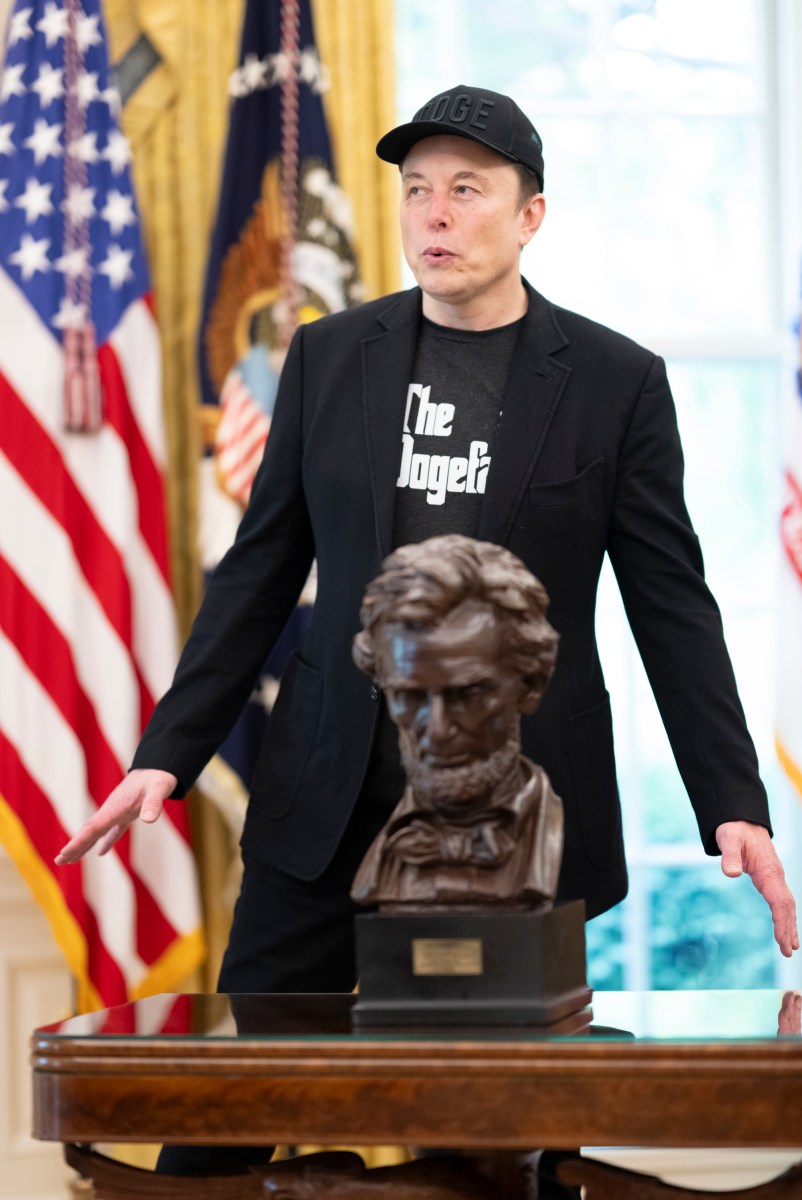
Elon Musk served in the White House as a non-career special government employee and senior adviser to President Trump during the opening months of the second administration, becoming the public face of the administration’s DOGE government-efficiency drive. His temporary government service ended May 30, 2025.
Current record notes: {'id': 'musk-service-ended-2025-05-30', 'date': '2025-05-30', 'display_date': 'May 30, 2025', 'subjects': ['office-role', 'government-executive-orders'], 'summary': 'Musk’s temporary White House service ended. The White House held an Oval Office farewell event and described him as a departing DOGE adviser; Reuters reported that his special-government-employee period was ending and off-boarding had begun.'} {'id': 'musk-white-house-status-2025-02-17', 'date': '2025-02-17', 'display_date': 'February 17, 2025', 'subjects': ['office-role', 'government-executive-orders'], 'summary': 'A White House declaration filed in federal court described Musk as a non-career Special Government Employee and Senior Adviser to the President, and stated that he was not the formal administrator or an employee of the U.S. DOGE Service.'}
FactFlag treats this page as a maintained public-record profile. Specific disputed factual claims are evaluated separately, with the original statement, primary evidence, contextual reporting and any material rebuttal shown together.
Role snapshot
Position & relationship
- Position / relationship
- Former Senior Adviser to the President / Special Government Employee; DOGE public face
- Affiliation / context
- Trump Administration / independent business executive
- Directory
- Former / Recent
- Profile status
- Former special government employee
- Service dates
- January 20, 2025 – May 30, 2025
Role history & transitions
Documented current/future role notes
- Musk’s temporary White House service ended. The White House held an Oval Office farewell event and described him as a departing DOGE adviser; Reuters reported that his special-government-employee period was ending and off-boarding had begun.
- A White House declaration filed in federal court described Musk as a non-career Special Government Employee and Senior Adviser to the President, and stated that he was not the formal administrator or an employee of the U.S. DOGE Service.
Evidence boundary
Fairness & uncertainty note
This profile separates Musk’s formal employment/status from the administration’s public descriptions of his influence and from specific DOGE actions carried out by agency personnel.
Claims & evidence
Evidence tracker
Directly related evidence records
These records are stored once in the canonical evidence archive and surfaced here because this person is directly involved in the underlying action, agency, statement or dispute.
August 24, 2026 · disclosure reported from June transaction · Presidential finances / SpaceX / government contractor / ethics and disclosure · Directly related record
Trump financial disclosure shows a June purchase of up to $50,000 in SpaceX shares, creating a disclosed financial stake in a major federal contractor run by former adviser Elon Musk
PUBLIC FINANCIAL DISCLOSURE — TRUMP REPORTEDLY BOUGHT UP TO $50,000 OF SPACEX SHARES IN JUNE; DISCLOSURE ALONE DOES NOT ESTABLISH A POLICY QUID PRO QUO
Not rated on the thermometerThis related item is a policy/public-record development rather than a single rateable factual proposition.
Why it appears on this profile: Musk leads SpaceX and previously served as a White House special government employee/senior adviser. This cross-profile link documents the company/adviser relationship; it does not imply Musk directed Trump’s purchase or that a government action was exchanged for the investment.
What is being said
The relevant public record is the disclosed securities transaction, not a factual claim by Trump. Reuters describes the purchase as giving Trump a financial stake in a major government contractor headed by his former adviser. OGE separately confirms that the President’s certified annual public financial disclosure is publicly available and explains the federal public-disclosure system.
What the record shows
Reuters reports that Trump bought SpaceX shares in June in a transaction disclosed in the public financial-reporting system, with the reported disclosure range topping out at $50,000. SpaceX has extensive federal business, including national-security and space contracts, and Elon Musk served in the White House as a special government employee/senior adviser before leaving government service in May 2025. Those facts make the holding relevant to transparency and conflict-of-interest scrutiny. They do not, without additional evidence, establish that Trump participated in a specific government matter affecting SpaceX because of the investment, that SpaceX received a contract because of the investment, or that Musk directed the transaction.
Assessment context: This is an unrated public-record/ethics item. The strongest evidence is the federal financial-disclosure framework and same-day Reuters reporting on the disclosed June transaction. FactFlag separates the existence of a financial interest and government-contractor relationship from stronger allegations about motive, favoritism or a quid pro quo, which would require separate evidence tied to a particular official action.
Open canonical evidence record →
August 20, 2026 · Space policy / Commercial launch / Federal infrastructure / Regulatory streamlining · Directly related record
Trump orders a commercial-first National Space Transportation Policy targeting capacity for more than 1,000 U.S. launches and reentries a year by 2030
POLICY MEMORANDUM — 1,000+ ANNUAL LAUNCHES/REENTRIES IS A 2030 CAPACITY TARGET, NOT A CURRENT ACHIEVEMENT
Not rated on the thermometerThis related item is a policy/public-record development rather than a single rateable factual proposition.
Why it appears on this profile: Reuters identifies SpaceX as a major commercial launch company whose growth ambitions make the policy economically relevant. This cross-profile link records industry context only; the memorandum does not award SpaceX a contract and does not establish that Musk directed the policy.
What is being said
The White House describes the memorandum as a “Golden Age of Space Transportation” policy intended to make U.S. launch infrastructure more commercial, scalable and responsive. The memorandum sets a national goal that U.S. space-transportation ranges support more than 1,000 launches and reentries every year by 2030 and directs multiple agencies to reduce infrastructure, permitting, airspace, spectrum and industrial-base constraints.
What the record shows
The signed memorandum establishes concrete implementation tasks and deadlines. Within 180 days, the Transportation Secretary must identify potential additional launch sites, integrate launch/reentry management into air-traffic modernization and designate priority airspace for critical launch corridors. Commerce and the FCC must report on spectrum access; Interior must identify a federal-land reentry site within 90 days; Commerce must later develop that site plan; and the administration must develop a space-transportation industrial-base strategy. The memorandum also tells agencies to favor commercial space-transportation services for government needs, subject to mission, safety, national-security and legal constraints. Reuters reported that U.S. activity was 178 launches/reentries in the previous year, making the 1,000-plus figure a large future capacity target rather than a description of present operations.
Assessment context: The policy document itself supports the existence of the 2030 target and the agency deadlines. What is not yet established is whether the United States will reach the target, whether permitting changes will materially lower costs or delays, or which companies will receive the greatest commercial benefit. Those are implementation and outcome questions that require later FAA, NASA, Commerce, FCC, Defense and industry records.
Open canonical evidence record →