Directly related evidence records
These records are stored once in the canonical evidence archive and surfaced here because this person is directly involved in the underlying action, agency, statement or dispute.
September 11, 2026 · Energy / J.H. Campbell coal plant / Federal Power Act Section 202(c) / D.C. Circuit · Directly related record
D.C. Circuit rejects Energy Department emergency justification for keeping Michigan’s J.H. Campbell coal plant available
COURT RULING — D.C. CIRCUIT FINDS NO STATUTORY EMERGENCY FOR CAMPBELL ORDER; SUCCESSIVE EXTENSIONS AND NEXT APPELLATE STEPS REQUIRE SEPARATE TRACKING
Not rated on the thermometerThis related item is a policy/public-record development rather than a single rateable factual proposition.
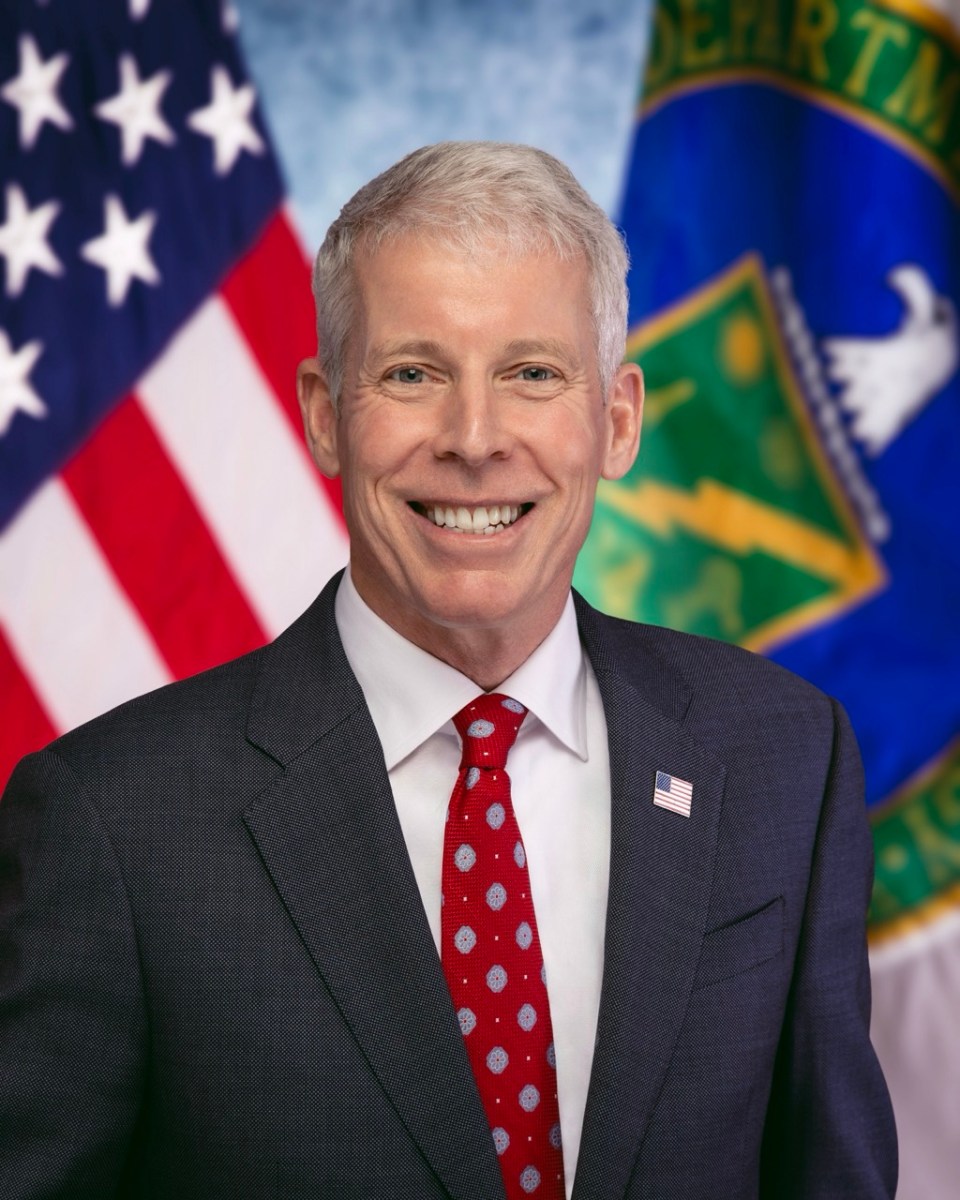
Why it appears on this profile: As Secretary of Energy, Chris Wright issued and renewed the Section 202(c) orders directing that J.H. Campbell remain available; this record tracks the D.C. Circuit ruling on that agency action.
What is being said
Energy Secretary Chris Wright and DOE said repeated Section 202(c) orders were needed to address Midwest grid-reliability risks. DOE’s August 14 order directed MISO, in coordination with Consumers Energy, to keep the Campbell plant available to operate through November 14, 2026 and to use economic dispatch to minimize costs.
What the record shows
Associated Press reported on September 11 that a unanimous D.C. Circuit panel sided with states and public-interest challengers and concluded that DOE had not established an “emergency” within the meaning of Section 202(c) for the Campbell intervention. Judge Cornelia Pillard wrote that the provision is a narrow, last-resort backstop and that reversing a long-planned retirement was disruptive. DOE’s own records show a sequence of Campbell Section 202(c) orders beginning in May 2025 and continuing in 2026; the latest listed Campbell order was issued August 14 and was scheduled to run from August 17 through November 14. FactFlag therefore records the appellate holding and the separate existence of later DOE extensions without treating the decision, by itself, as proof of the plant’s immediate physical shutdown or as a final Supreme Court disposition.
Assessment context: The important factual development is a precedential appellate ruling on the statutory basis DOE invoked to keep Campbell available. The administration’s reliability rationale and the challengers’ contrary legal position are distinguishable from the court’s holding. Because DOE issued successive 90-day orders and further review or implementation steps may follow, the ruling should be tracked as a legal-status change rather than converted into assumptions about every later order or the plant’s real-time operating status.
Open canonical evidence record →
August 27–September 1, 2026 · agreement terms updated as disclosures develop · Venezuela / oil resources / announced U.S. majority-control deal · Directly related record
Trump announces Venezuela oil agreement after earlier equity-stake talks; implementation details remain incomplete
ANNOUNCED AGREEMENT — TRUMP SAYS THE U.S. WILL CONTROL 65 BILLION BARRELS THROUGH A 55% OPERATING SHARE; PUBLIC LEGAL/FINANCIAL DETAILS REMAIN INCOMPLETE
Not rated on the thermometerThis related item is a policy/public-record development rather than a single rateable factual proposition.
Why it appears on this profile: Axios reports that Energy Secretary Chris Wright is expected to travel to Venezuela as part of the energy discussions. This cross-profile link records reported implementation/diplomatic context, not a completed ownership transfer.
What is being said
Trump described the arrangement as the “biggest oil deal in world history” and said the United States would gain access to roughly 65 billion barrels of Venezuelan reserves. Reuters and AP reported that Secretary of State Marco Rubio and Defense Secretary Pete Hegseth helped negotiate the arrangement with Venezuela’s interim government and that a new private company is expected to develop 17 fields with a 55% U.S. operating share.
What the record shows
Reuters and AP independently reported the August 28 announcement. Both described a proposed majority-control structure and significant planned investment, while also noting that important legal, financial and operational details were not yet public. Venezuela has very large proven oil reserves, but a stated 65-billion-barrel controlled resource position is not the same as immediate ownership of produced oil or near-term output. Existing infrastructure, capital requirements, field-by-field contracts, Venezuelan law and execution risk remain material to how much oil can actually be developed and when. August 30 reporting added another unresolved implementation detail: Reuters summarized a Wall Street Journal report describing a proposed 35% passive U.S. stake in a Betancourt-led oil venture, but a Pentagon spokesperson said the Office of Strategic Capital does not take equity stakes and instead provides capital assistance through loans or technical support. That discrepancy reinforces the need to distinguish Trump’s announced 55% operating-share framework from any specific, legally documented U.S. ownership instrument. Later August 30 reporting added a stated end use: Trump said oil obtained through the Venezuela arrangement would be directed to the Strategic Petroleum Reserve. Reuters noted that the timing remains uncertain because Venezuelan production expansion requires substantial investment and infrastructure work. That statement does not establish that Venezuelan barrels have already been delivered to the reserve.
Assessment context: The status has advanced from a reported negotiation to a publicly announced agreement. FactFlag therefore updates the record rather than leaving the earlier “no final agreement documented” wording in place. The superlative “biggest oil deal in world history” remains promotional language rather than a cleanly verifiable metric because comparable deals can be measured by reserves, transaction value, production, ownership rights or investment. The operational claims should be revisited when the underlying agreement, company documents or field-specific instruments are published. The August 29 gasoline-price promise is a forward-looking outcome claim, not a result that can yet be verified. Greater Venezuelan output could add downward pressure to crude prices over time, but the size and timing of any U.S. retail gasoline effect depend on actual field development, global supply and demand, refining constraints and implementation of the agreement.
Open canonical evidence record →
August 26, 2026 · Energy security / Electric grid / Cybersecurity · Directly related record
Executive Order 14420 declares bulk-power-system national emergency and orders foreign-equipment restrictions
PUBLIC-RECORD EXECUTIVE ACTION — FOREIGN GRID-EQUIPMENT RESTRICTIONS ANNOUNCED; SPECIFIC COVERED EQUIPMENT AND CONTINUED-USE CONDITIONS DEPEND ON ENERGY DEPARTMENT IMPLEMENTATION
Not rated on the thermometerThis related item is a policy/public-record development rather than a single rateable factual proposition.
Why it appears on this profile: The order assigns implementation responsibilities to the Secretary of Energy, making Energy Secretary Chris Wright a directly related administration official for the restrictions and continued-use conditions.
What is being said
The order states that foreign supply of bulk-power system electric equipment constitutes an “unusual and extraordinary threat” to U.S. national security, foreign policy and the economy. Reuters reports that the White House tied the action to cybersecurity and operational risks from some foreign-produced grid equipment and associated software or digital capabilities.
What the record shows
Reuters reported August 26 that Trump signed the order and declared a national emergency. The order prohibits purchase or installation of certain foreign-produced bulk-power system electric equipment judged to pose risks and directs the Energy Secretary to impose conditions on continued use and operation of affected equipment. The action follows earlier 2026 White House use of Defense Production Act authorities to expand domestic grid-infrastructure and supply-chain capacity. FactFlag does not treat the administration’s threat characterization as independently proven merely because it appears in the order; the legal restriction, the stated rationale and later technical implementation are separate evidentiary questions. The signed White House text identifies the action as Executive Order 14420. It directs the Energy Secretary to publish implementing rules or regulations as needed within 120 days and to recommend Federal Acquisition Regulation revisions within 180 days, with the FAR Council then to consider proposed amendments within 90 days. Those deadlines make the implementation status more specific than the initial announcement.
Assessment context: The signed executive action is a documented public-policy event. Reuters independently reported the order and its principal restrictions. Earlier White House records establish the administration’s pre-existing concern about foreign dependence in transformers, transmission components, substations, control electronics and related grid supply chains. The actual scope of covered equipment and operational conditions will depend on Energy Department implementation.
Open canonical evidence record →
August 21, 2026 · Energy / Defense Production Act / California pipeline / Federal-state authority · Directly related record
Federal court backs DOE’s Defense Production Act authority for Sable pipeline restart while preserving parts of the consent decree
COURT RULING — UNRATED / LOWER-COURT ORDER UPHOLDS FEDERAL RESTART AUTHORITY; APPEAL PENDING
Not rated on the thermometerThis related item is a policy/public-record development rather than a single rateable factual proposition.
Why it appears on this profile: As Secretary of Energy, Wright issued the March 13 Defense Production Act order that the district court declined to block; this record belongs on his profile because his order is the direct subject of the litigation.
What is being said
The Justice Department characterized the ruling as a major victory for the Trump administration’s national-energy-security policy, saying the court confirmed the Defense Production Act order’s preemptive force and rejected California’s request to halt pipeline operations. California has argued that Secretary Wright exceeded the Defense Production Act and unlawfully displaced state and court-ordered safeguards.
What the record shows
Energy Secretary Chris Wright issued the March 13, 2026 Pipeline Capacity Prioritization and Allocation Order under delegated Defense Production Act authority, directing Sable Offshore to restore the Santa Ynez Unit and pipeline system. California sued, arguing the order exceeded the statute, violated the Administrative Procedure Act and could not override state law or a federal consent decree governing restart conditions. In the August ruling, U.S. District Judge Stephen Wilson declined to halt the federally directed restart and modified the existing consent decree so that federal PHMSA, rather than California’s Office of the State Fire Marshal, supervises the relevant pipeline-safety requirements during the national emergency. The ruling was not a complete vindication of Sable: Wilson found that Sable had violated express provisions of the consent decree before the modification, kept the decree in place, incorporated post-restart safety requirements, and imposed a $1.449 million penalty. The court also rejected Sable’s argument that the Defense Production Act immunized it from penalties for violating a federal court order. California filed an appeal, so the legal status may change.
Assessment context: FactFlag records this as an unrated court/legal development. The ruling is a checkable event and materially changes the administration’s ability to keep the pipeline operating, but assigning a FactFlag Meter percentage would improperly collapse several live legal questions into a factual score. The site therefore records what the district court held, what it did not hold, the consent-decree violation finding, and the pending appeal.
Open canonical evidence record →
August 21, 2026 · MAHA / Coal / AI data centers / Environmental health · Directly related record
Nearly 200 MAHA activists urge Trump not to rely on coal for AI data-center expansion
PUBLIC-RECORD DISPUTE — UNRATED / ACTIVIST LETTER, NOT AN HHS POLICY STATEMENT
Not rated on the thermometerThis related item is a policy/public-record development rather than a single rateable factual proposition.
Why it appears on this profile: Energy Secretary Chris Wright is directly related because the Energy Department is responsible for implementing major parts of the administration’s coal and data-center energy policy challenged by the letter.
What is being said
The letter, obtained by the Associated Press, says the signers support U.S. leadership in artificial intelligence but argue that data-center growth should not increase toxic pollution burdens for children. It asks the administration to consider alternatives including solar and geothermal power and to preserve transparent environmental review of data-center siting and power-sourcing decisions.
What the record shows
The policy being challenged is real. Executive Order 14261 directed the Interior, Commerce and Energy departments to identify regions where coal-powered infrastructure could support AI data centers, assess the potential for expanding coal-based infrastructure, and report proposals to the White House. DOE has since continued a broader coal-support strategy. AP reported that the August 21 letter was signed by nearly 200 MAHA activists, including at least two former Kennedy campaign staffers, and was addressed to Trump, Kennedy and other officials. The public record therefore supports describing a significant faction of the MAHA movement as objecting to the administration’s coal/data-center policy. It does not support describing the letter as Kennedy’s own position or as representing every MAHA organization or supporter.
Assessment context: This is recorded as an unrated public-record dispute. The existence of the letter and the administration’s coal-for-AI policy are checkable. The signers’ broader judgments about future public-health effects and preferred energy mix are policy and risk arguments that should not be reduced to a FactFlag Meter score without a narrower factual proposition.
Open canonical evidence record →
August 20, 2026 · Critical minerals / Battery supply chain / Department of Energy grants · Directly related record
Energy Department selects seven U.S. critical-minerals and battery projects for about $500 million in grants
FEDERAL FUNDING ACTION — UNRATED / AWARD IMPLEMENTATION RECORD
Not rated on the thermometerThis related item is a policy/public-record development rather than a single rateable factual proposition.
Why it appears on this profile: Energy Secretary Chris Wright leads the Department of Energy, which is directly responsible for the competitive critical-minerals grant program and the August 20 project selections.
What is being said
Reuters reported on August 20 that the Trump administration, through the Department of Energy, selected seven companies for roughly $500 million in grants supporting domestic lithium extraction, cobalt refining, battery recycling and related processing. The reported selections include $100 million each for Lilac Solutions, Jervois and Nth Cycle, with additional awards to Princeton NuEnergy, Arcanum Ventures, Coreshell Technologies and another selected project.
What the record shows
DOE announced the competitive funding opportunity in March 2026 for up to $500 million to expand domestic critical-mineral and materials processing, battery-material manufacturing and recycling. DOE described the program as a third round of Battery Materials Processing and Battery Manufacturing and Recycling grants and said eligible projects could include lithium, graphite, nickel, copper, aluminum and other critical materials. Reuters reported the August 20 project selections and described them as part of the administration’s effort to reduce U.S. dependence on foreign—especially Chinese—critical-mineral supply chains. The public record therefore supports the existence and purpose of the funding action. Individual project performance, final negotiated award amounts and eventual production outcomes remain future implementation questions and should not be treated as already achieved.
Assessment context: The selection of projects and the existence of the underlying competitive funding program are checkable government actions. No Evidence Gap score is assigned because this record does not hinge on a discrete factual claim suitable for a thermometer rating. Future claims about jobs created, production volumes, cost savings, China-dependence reductions or project completion should be evaluated separately against final award documents and performance data.
Open canonical evidence record →
July 23, 2026 · Saudi Arabia / Civil nuclear cooperation / Abraham Accords · Directly related record
Saudi nuclear pact moves from signed-but-pending to formal congressional review while Trump keeps Israel-normalization condition
STATUS UPDATED — SIGNED JULY 22 AND SUBMITTED TO CONGRESS AUGUST 25; CONGRESSIONAL REVIEW HAS BEGUN, WHILE TRUMP’S ABRAHAM ACCORDS CONDITION STILL CLOUDS IMPLEMENTATION
 55% evidence gapWELL SUPPORTED
NOT SUPPORTEDWhy it appears on this profile: As Energy Secretary, Wright signed the U.S.–Saudi Section 123 agreement on July 22, making his official action central to the record Leavitt described the next day.
What is being said
On July 23, Karoline Leavitt described the signed U.S.–Saudi nuclear agreement as still being worked out after Trump said he would not proceed unless Saudi Arabia joined the Abraham Accords. On August 25, the administration formally submitted the agreement to Congress for review, moving the pact into the statutory review stage while retaining Trump’s normalization condition.
What the record shows
The Department of Energy announced July 22 that Energy Secretary Chris Wright and Saudi Energy Minister Prince Abdulaziz bin Salman had signed a peaceful nuclear cooperation agreement, commonly called a Section 123 agreement, plus a bilateral safeguards agreement, and said it would be transmitted to Congress. Reuters and AP reported on August 25 that Trump had now submitted the agreement to Congress. The Atomic Energy Act review gives Congress a defined review period before an agreement can take effect absent enacted disapproval. Reuters reports Trump still says implementation depends on Saudi Arabia joining the Abraham Accords. The submitted agreement has drawn congressional and nonproliferation criticism because it does not include the categorical enrichment/reprocessing bans sought by some lawmakers and arms-control advocates. Saudi Arabia, meanwhile, continues to link normalization with Israel to progress toward Palestinian statehood.
Assessment context: Leavitt’s July characterization needed context because a formal agreement had already been signed even though it was not yet effective. The August 25 submission resolves one part of that status uncertainty: congressional review is now actually underway. It does not resolve whether the agreement will enter into force, whether Trump’s separate Abraham Accords condition will be satisfied, or the policy dispute over enrichment and reprocessing. FactFlag therefore preserves the original context rating while updating the legal/procedural stage.
Open canonical evidence record →